BBC Orbit

BBC Orbit

Find fresh tunes for your playlists using your ears, not AI

159 followers

Tired of your music recommendations? Support undiscovered artists and find new tracks for your playlists, expertly handpicked by BBC Introducing. No algorithms, no genres and no personalisation — listen and tune into what sounds good to you now. Powered by humans, not AI.
BBC Orbit gallery image
Free
Launch tags:MusicSpotifyLifestyle
Launch Team / Built With
Intercom
Intercom
Startups get 90% off Intercom + 1 year of Fin AI Agent free
Promoted

What do you think? …

Mathieu Triay
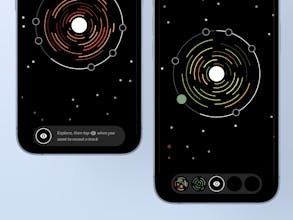
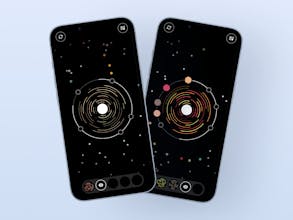
Orbit is a music discovery service that we (BBC R&D) have developed in collaboration with BBC Introducing. Andrew Wood and I have been working on the development and design for the last 6 months and I still can't quite believe we get to make things that are so cool and can help artists and audiences connect. Rob Scott, Tristan Ferne and Clare McAndrew helped shepherd this into existence with so much respect for our idiosyncratic process. And of course, the BBC Introducing team has been so supportive and none of this would have been possible without their tireless work. This project started when we heard from users that personalised algorithms made them feel stuck in a box they hadn't consciously chosen or designed. They said they found music discovery on their own terms difficult: they couldn't find new tunes when they wanted to — it just happened to them, outside of their control. So instead of receiving recommendations, in Orbit you actively make decisions based on what you hear and what resonates with you in the moment. BBC Introducing has been playing new music from unsigned and undiscovered new artists in the UK since 2007. We take the last month's batch of what they've curated and we organise it using data extracted from within the track itself. It doesn’t matter whether other people like it, whether it’s been skipped before etc. It’s simply how it “sounds”. Tracks with a similar vibe are placed close together and each is a potential doorway to something different. You start with 10 samples from different spaces within the collection. There's no metadata visible, no artist name, track title or images. Just choose what sounds good and you’ll get tracks in the same... orbit! If you hear something you like, you can reveal the artist and track title, and that's stored in your collection. You can sample as many tracks as you like, but you only get 5 "reveals" a day. This isn’t about limiting discovery — it’s about making each track count and respecting the user’s time. Find new tracks that you like and get on with your day. Building this, I've already discovered so many new artists, I'm eager to hear if you do too!
Yash Choudhary
Upvoted, We are launching on the same day, which is amazing for me. Otherwise, I would have found this later in life. You folks have done a fantastic job with this tool. I'm truly thankful! Plus the UI is so damn clean <3 Kudos to your entire team for building Orbit. Cheers and congratulations on the launch!
Mathieu Triay
@yashchoudhary Thank you! Some very kind words. Your service looks really great, something to look into for me as a developer :)
Yash Choudhary
@mathieuloutre Do give it a try, I would love your feedback, what you have built is an absolute gem! Btw, I have been raving about your product to my colleagues for about an hour :)
Sage Wang
The absence of genres and personal data makes it feel like a genuine music exploration journey. Plus, the limit of five reveals a day adds a layer of intentionality, encouraging users to savor each track. It’s a fantastic way to discover new music while supporting upcoming artists.
Mathieu Triay
@flashsonic Thank you, I think you've summarised our design goals brilliantly :)
Yatheen Brahma
BBC Orbit’s focus on music discovery without relying on genres or algorithms is refreshing . It allows listeners to tune into what truly resonates with them in the moment.
Kyrylo Silin
Hey Mathieu, How do you determine which tracks have a "similar vibe" without relying on genres or other metadata? Do you use any audio analysis techniques to group similar-sounding tracks together? I'd love to learn more about the technology behind it. Congrats on the launch!
Mathieu Triay
@kyrylosilin Hey! We've got a blog post coming up but in short we use some specialised (and open source) machine learning models to extract 8 different indicators (danceability, if it's more relaxed or more party oriented, if it's sad or happy sounding, if it's electronic or acoustic and if it's instrumental only, etc.) and we use dimensionality reduction techniques to compress the 8 dimensions into 2. Can update here with the blog post when it's ready :)
Raoul Nanwani
Love the idea!! Definitely solves the problem of getting bored listening to the same old tunes! Great job on this :)
Yalin Solmaz
@mathieuloutre I absolutely love this. It is a pre-curated list of songs that I get to explore with just the sound and whether or not I like it. I love that the album/artist is hidden until you want to reveal it. I love that you create this visual map of the audio world I'm exploring. Just love it. Plus, I actually discovered 4 artists I had never heard of before in Apple Music! I'll be using it every day.
12
Next
Last