Gnothi

Gnothi

AI Journal and Toolkit for a healthy and happy life

35 followers

Open-source AI journal. Insights & resources include GPT-powered prompt -which uses entry history as context - behavior analysis, book recommendations, entry summaries, and recurring themes, and more.
Gnothi gallery image
Free
Launch Team
Anima - Vibe Coding for Product Teams
Build websites and apps with AI that understands design.
Promoted

What do you think? …

Tyler Renelle
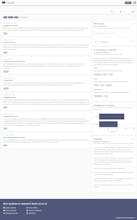
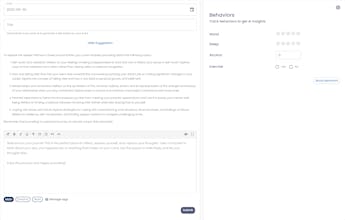
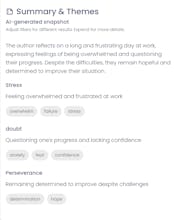
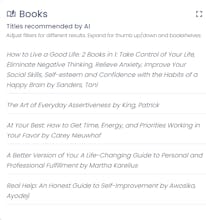
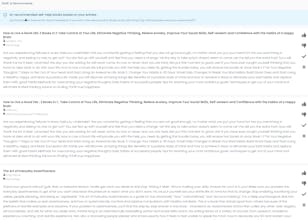
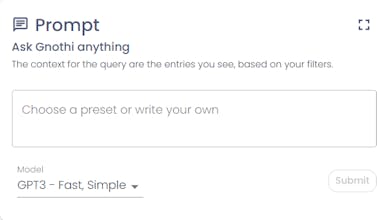
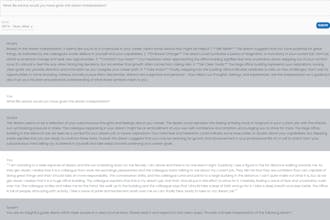
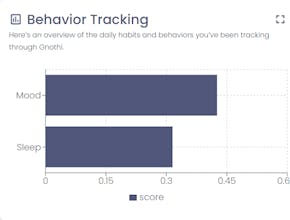
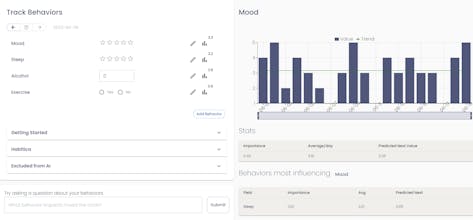
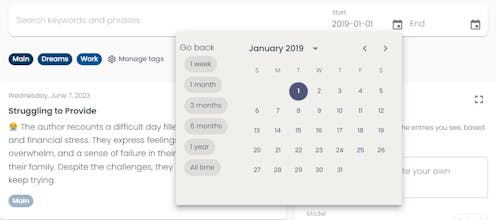
Gnothi: open-source AI journal. Insights & resources include GPT-powered prompt (which uses journal entries as context) behavior analysis, book recommendations, entry summaries, and recurring themes. My partner and I just launched Gnothi (v1). We’re both psychology/personal development enthusiasts who work in tech. We started Gnothi to get us journaling more, and to leverage machine learning to optimize the process. Overview of features: * Journal [free]. Unlimited entries. My partner and I created this to use in our daily lives. Gamechanger for mental health and having clear direction in life. * Prompt [premium]. In the GPT era, we all know about prompt. What's different about Gnothi is that it uses your prior entries (based on filters) as background context for the conversation, so you don't need to set the stage with GPT. You can just ask what you want to ask. We recommend trying this with dreams. Record a dream in Gnothi and choose the dream-interpretation preset, and be amazed. * Recommended next-entry [premium]. Don't know what to write about today? Gnothi will help you get started, based on the depth salience of prior entries. * Books [free]. Recommendations for reading based on your journal entries. My favorite feature. * Behaviors [free]. Habitica (which I created in 2012) was a great tooth-sharpener on habit-formation. Gnothi provides habit-analysis using machine learning. At present, it's correlation analysis: what behaviors (alcohol, exercise, etc) correlate with the behavior under scrutiny (sleep, mood, etc). Gnothi will guess your behavior for today ("I think your mood will be 4.5") and show overall top influencers (stop drinking). Soon we’ll add cause-effect analysis through causal inference (DoWhy). Powerful concept: "What's the first domino?", as in "What should I focus on to sleep better?” (excluding the intermediates). * Summaries & Themes [free/optimized with Premium]. Each entry is summarized in the dashboard for quick scanning/searching. An emoji is applied to your entry too. Themes are useful to see what's on repeat in your life. Super helpful for identifying patterns, recurring issues. * Multi-Entry Analysis via filters. IMPORTANT because filters drive all insights/resources in real time. When you apply filters in the dashboard (tags, dates, search), all AI is re-calculated based on the result. Create tags for different topics like, work, relationships, dreams, etc. House general entries in the “main” tag. For example, if you select the “work” tag, all the book recommendations, a summary, and themes will be based on those entries. You can also use Prompt to get feedback and dive deeper with all of the work-related entries as context. * Single-Entry Analysis. When you open a single entry, the AI insights that populate will be isolated to that entry. Use Prompt to ask AI questions and introspect. Especially great for book recommendations related to what you’ve just written about. Gnothi is free to use. The goal is really to take a tool that we created— that’s helpful for us—and make it available for anyone to use. There are some costs to running the free version, but they’re relatively minimal so we’re absorbing them. The insights are not nearly as impressive as our Premium membership but, with over 1,000 users, it’s clear that people see value in it. The premium features cost more to run. It’s a way for people to get access to optimized features via GPT. Likewise, it’s a source of financial support for us to keep building new features, and improve upon what’s already been created. Feel free to check out our Github repo. Always looking to connect with contributors. If you try it out and have any thoughts, you can reach out via discord and/or submit issues/questions on our repo.
Sean Dorje
@tyler_renelle Great idea Tyler, journaling is the ultimate introspective tool that i think more people need to use to accept themselves, stay grounded, and self-improve. I think one cool feature you can add since you mentioned behavior analysis is a recording option cuz I feel like lots of young people prefer to record and talk instead of write. Furthermore, you can use AI to analyze their recording and feed them input, analysis, recommendations, etc. Coincidentally, in that case, if you need computer vision integration please reach out to me. My startup ezML handles powerful computer vision model integration so you won't have to go through any machine learning hassle. Anywhow, great work! I hope we can connect and I'm fully supporting you, excited to see where this product heads!
Martha Musselman
@sean_dorje Thank you for reaching out! We hope to incorporate speech-to-text at some point in the future—hopefully with the launch of a mobile app. In addition to journal entries, this would be a very useful feature for dream recordings and interpretations. It would certainly be easier to wake up and create an audio recording of your dream than it would be to type it out in the morning before it’s forgotten. We will certainly keep you in mind when we get around to adding a feature like this. Thanks again for your support!
Tyler Renelle
@sean_dorje thanks so much for the support! Lots of work yet to do. I'll keep ezML in mind if we delve into CV!
Tarun Paliwal
Congratulation Gnothi and team
Martha Musselman
@tarunpaliwal We really appreciate all the support! Thank you!