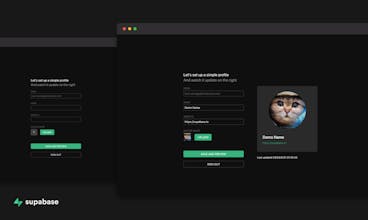
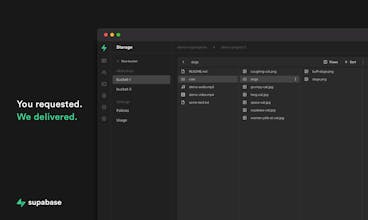
Supabase is an open-source backend-as-a-service that provides real-time databases, authentication, and API services. It enables developers to build and scale applications quickly without managing server infrastructure.
One recurring issue we ve been seeing with Supabase setups is not the database itself, but how credentials are managed across environments. The common pattern looks something like:
credentials stored in .env files or secrets managers
multiple environments (dev, staging, prod)
manual propagation or duplication across those environments
It works, but over time it seems easy for things to drift:
a key gets rotated in one environment but not others
a redeploy misses an env var
credentials get misconfigured during setup or migration
Reviewers largely see Supabase as a fast, reliable way to ship a real backend without much infrastructure work. The most repeated praise is the all-in-one mix of Postgres, auth, storage, realtime features, and row-level security, plus clear docs, easy integrations, and a dashboard that feels approachable even for less technical teams. Users also like avoiding vendor lock-in because it stays close to standard Postgres. The main complaints are thinner spots in docs and UX, occasional edge-function cold starts, inactivity limits on free projects, and pricing gaps as smaller teams grow.
fast performance (19)developer experience (28)easy setup (38)seamless integration (18)scalable infrastructure (35)authentication features (59)PostgreSQL integration (43)
Built a full marketplace as a solo founder on Supabase (auth, postgres, RLS, storage, edge functions, realtime, serverless webpages). I'd have needed a small backend team to wire all of that up myself. Postgres underneath means I'm never locked in and never fighting a custom DSL.
RLS in particular is the unlock, security policies live next to the data, not buried in middleware that drifts out of sync.
What needs improvement
limited free tier (2)
Edge function cold starts are still slower than I'd like for user-facing calls. The dashboard's SQL editor is good but loses your unsaved query if you accidentally navigate away, would love a draft auto-save,
Oh, and the pricing jump from Pro to Enterprise is steep for solo founders who outgrow the free tier but don't need a whole org plan yet a middle "indie" tier would be welcome.
Looked at Firebase (no SQL, vendor lock-in), Pocketbase (single binary is great but no managed scaling), and rolling my own on raw Postgres +Hasura + custom auth.
Supabase wins because it gives you real Postgres with the production wiring already done, but doesn't hide the database
behind an opinion. Migrations are SQL files. Queries are SQL.
If I ever leave, I leave with my data and schema intact
Supabase is incredible, and not just because of the product's utility and features. What sets it apart is how accessible the entire experience is. The UI, the configuration, the documentation. Everything is designed so that even non-technical teams can navigate it without needing an engineer on call. We use Supabase as our database layer at ClawSecure and it's been one of the most reliable pieces of our stack. Being able to jump into the dashboard, inspect data, manage tables, and configure settings without writing raw SQL every time is a genuine productivity unlock. Supabase removes a barrier that most database tools don't even acknowledge exists.
vs Alternatives
Supabase is incredible, and not just because of the product's utility and features. What sets it apart is how accessible the entire experience is. The UI, the configuration, the documentation. Everything is designed so that even non-technical teams can navigate it without needing an engineer on call. We use Supabase as our database layer at ClawSecure and it's been one of the most reliable pieces of our stack. Being able to jump into the dashboard, inspect data, manage tables, and configure settings without writing raw SQL every time is a genuine productivity unlock. Supabase removes a barrier that most database tools don't even acknowledge exists.
Fantastic product! I've had barely any issues and i'm still on the free tier which is excellent! I will swap to paid if I have success with my app for sure and recommend to all!
What needs improvement
Documentation on auth was tricky but once I got a template for what I liked I managed to migrate it to a new app easily and it worked! I also find the UI elements for auth too basic so not usable.
Fantastic product! I've had barely any issues and i'm still on the free tier which is excellent! I will swap to paid if I have success with my app for sure and recommend to all!