Driven just finished its first Product Hunt launch, and one of the most valuable parts was reading the comments.
Not just the compliments, but the questions.
A few themes stood out:
1. Trust comes before automation
AI agents are already changing how we work. Hard to deny that now.
People are building new habits around digital companions and agents in funny ways.
I even know someone who had a brand-new phone ready, but still delayed switching because their little @OpenClaw lobster was living on the old one.
Many of us now use agents to summarize, draft, search, code, organize tasks, or monitor things in the background.
I think investing is next.
A lot of investing still depends on manual habits: checking prices, reading news, following filings, tracking earnings, reviewing portfolios, and trying not to miss important signals.
Not sure how many people in the PH community actively follow investing, US stocks, or the market.
But I think investing is an interesting test case for AI agents.
It is a high-trust domain. Not every task should be automated right away, and users should not give up control easily.
But there are also many places where agents can reduce a lot of manual work:
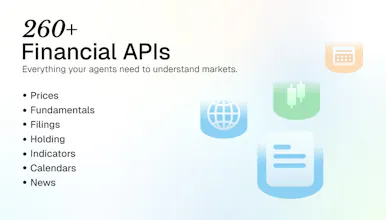
combining a real order workflow with the research/monitoring side instead of bolting execution onto a pure research tool is the right call - most of these products stop at the insight and leave you to go do the trade yourself. the 260+ API breadth is impressive on paper.
would like more transparency on exactly which data sources fed a given recommendation before I'd trust it with real order execution - a research tool being wrong costs you time, an execution agent being wrong costs you money.
the fact that it can actually place orders, not just alert you, was the deciding factor over the pure-research tools I looked at.
Hi Product Hunt,
I’m Zania from Driven. Excited to finally share what we’ve been building.
Driven started as a tool we wanted for ourselves.
We invest too, and our team has spent years building products around investor communities. One thing kept coming up again and again:
Investors are not short on information. They are overwhelmed by it.
There is more market data, filings, earnings content, news, X signals, portfolio data, and analysis than ever before. But most of the real work still falls on the investor: gathering context, checking what changed, comparing signals, and figuring out what actually matters.
We did not want to build another dashboard or another chatbot with market data attached.
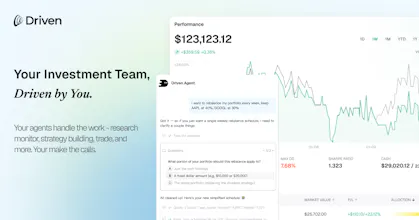
So we built Driven: an AI investment agent that helps investors move from insight to action.

A few things that make Driven different:
• Real-time data and 260+ APIs
• Built-in and custom Skills
• Playbooks for repeatable investment processes
• Scheduled tasks and 24/7 monitoring
• Portfolio context in one workspace
• Order workflows
• Investor control at every step
What we care about most is not just better AI answers.
It is whether an agent can keep following the companies, portfolios, filings, earnings, and market signals you care about, then bring you back when something actually matters... And that is just one part of what Driven can do.
That is why Driven feels less like a search box and more like an AI investment team.
We are still early, and we’d really love to hear how the PH community thinks about AI agents in investing.
Where would you trust an AI investment agent first:
finding ideas, monitoring signals, following earnings, tracking portfolios, or preparing actions?
the "24/7 monitoring plus order execution" combo is the part I'd want to understand before trusting it, not the research side. an agent that's wrong about a stock thesis costs you an afternoon of reading, an agent that's wrong and also has order placement wired up costs you an actual trade at 3am while you're asleep. what's the failsafe between "agent decides to act" and "order actually goes out," is there a human confirm step by default or does that only kick in above some size threshold
when you set up tasks to run automatically, by default Driven will ask for your confirmation before executing them. But that's obviously not very automated. So users need to establish some rules for automatically executing trades, and Driven will make a comprehensive judgment based on those rules and its understanding of the user to decide whether to execute the trade. or not.
Imagine putting your money in the hands of your personal financial advisor
@galdayan @galdayan Totally fair concern. This is exactly where the trust boundary should be.
By default, Driven asks for confirmation before an order is executed. The agent can monitor, analyze, and prepare possible actions, but it should not simply place a trade at 3am while you are asleep.
If a user wants more automation, they need to set clear rules first: what is allowed, under what conditions, within what limits, and when confirmation is still required.
So the goal is not a black-box trading bot. It is more like an agent that can monitor continuously and act only within agreed safeguards.
@samra_habib1 Of course. This is one of the standout features of the product Driven. When you first start chatting with Driven, it doesn't rush to give you advice.
Instead, it first gets to know your investment style and preferences. Through the interaction, it gradually builds up an understanding of you, and then can provide tailored investment recommendations.
It truly acts like an investment advisor who knows you well.
@samra_habib1 Definitely!! That’s exactly the idea.
Playbooks can be customized around different investing styles, but users don’t need to start with a perfect workflow. Even a rough idea or one sentence can become a more useful Playbook through chatting, adjusting, and learning what the user cares about.
So it’s also beginner-friendly: you can build your investing process as you go.
@hammad_shams_uddin Really good question!! and yes, “trusted” is a big word in investing. That’s partly why we chose it.
For us, it does not mean “just trust the model.” Driven uses frontier models like @Claude Code , @ChatGPT by OpenAI , @Gemini , and others, but for data-dependent investment questions, answers are grounded in live or structured data sources rather than relying only on model training.
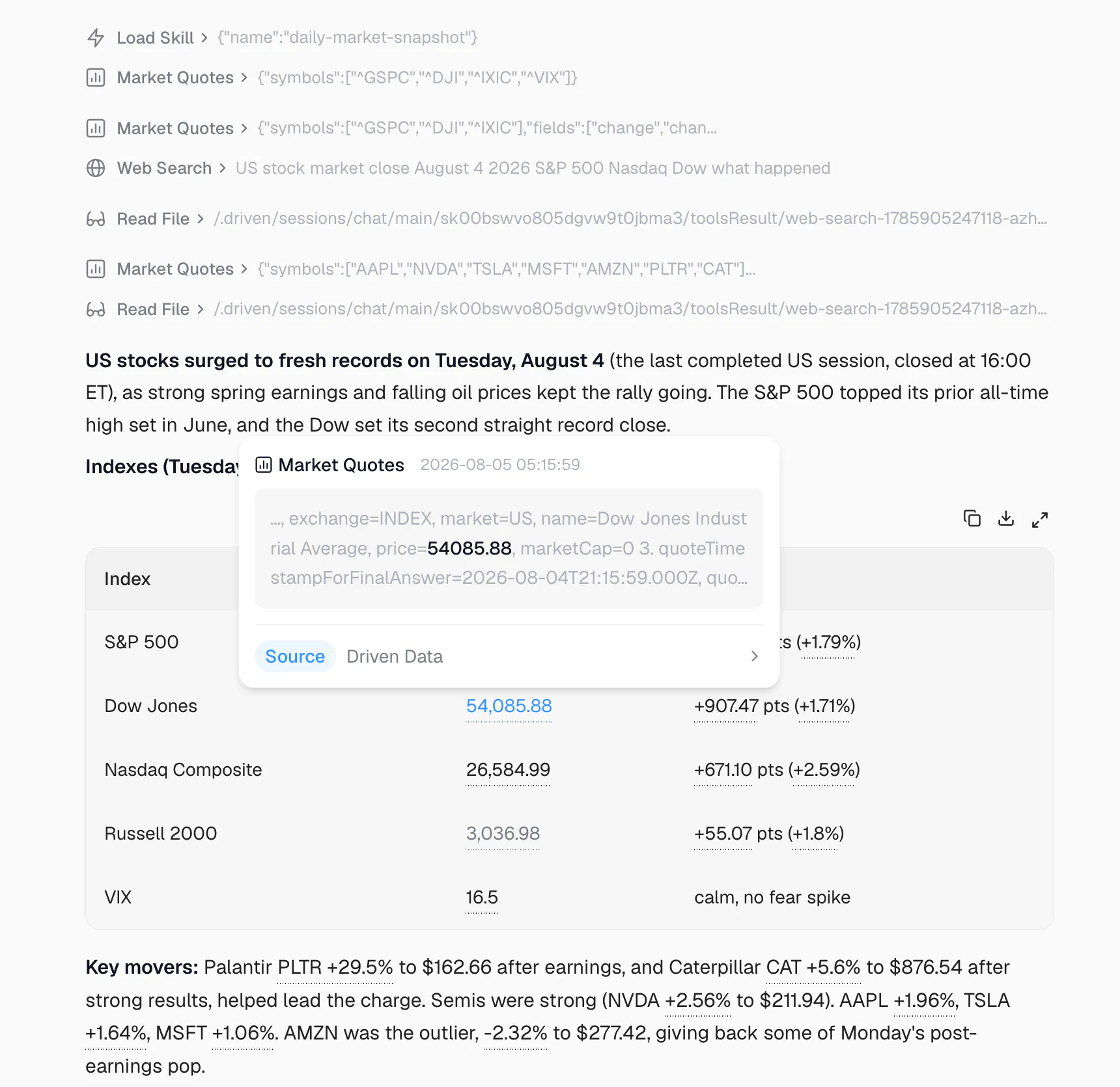
That includes filings, market data, fundamentals, news, analyst data, ownership and insider activity. When an answer depends on external data, we show sources and supporting context so users can check the call before acting.
Also, different investors also research differently. Some focus on filings and fundamentals, while others care more about market sentiment and community signals. For sentiment-driven analysis, Driven also lets users open the original source, such as the X profile or post, so they can inspect the context, replies, and interactions directly instead of relying only on a summary.
That is what “trusted” means to us: grounded, checkable, and built around how investors actually verify ideas.
Thank you, Hammad!
@zaniaz That's a proper answer, thank you — especially letting people open the original post for sentiment instead of a summary of it.
One thing I'm still turning over: you said sources are shown when an answer depends on external data. Who decides that it does?
A model will answer a data-dependent question from training alone and sound exactly as certain. Is there something visible on the ungrounded answers, or does the absence of sources have to be the signal?
@hammad_shams_uddin The model is certainly important, but truly achieving "trusted" requires reliable and real-time financial data sources integrated into our products, as well as our self-developed Harness tailored for investment scenarios, and unique product design that ensures every research data point and conclusion is traceable. Here's a case 👇

@zwaydot The trace is what makes "traceable" mean something — most products stop at a citation list and call it done.
The question it raises for me: a trace shows what was called, not what was load-bearing. If eight queries feed one conclusion and one of them is wrong, does the trace tell me which one the answer actually rested on?
@ayesha_mughal1 That’s exactly the gap we’re trying to close.
The data is already out there: filings, market data, news, insider activity, sentiment, portfolios, and more. But keeping up with all of it, connecting the dots, and turning it into your own investment decisions or actions takes a lot of time.
That gap between “I found the information” and “I know what to do with it” is where we think an investment agent can help, especially for investors working without a team behind them.
Driven is built to bring research, monitoring, analysis, portfolio context, and action closer together, so investors do not have to keep juggling separate tools.
Would love for you to try it and share any feedback. We’re iterating quickly and really want to make the experience better for real investors.
Honestly, the phrase "trusted AI investment agent" is doing a lot of work here, and trust in this space has to be earned, not claimed. What would convince me is transparency, showing its reasoning, not just its conclusions. If it shows the "why" behind a signal instead of just the "what," that's a meaningfully different product than the dashboard tools I've used before.
@david_grunwald1 Hit the nail on the head 👍
I have many cases that can demonstrate how reliable and transparent Driven is in the investment process, with every step of its research and data citations being well-documented. Here is one of those cases 👇

@david_grunwald1 Absolutely agree. Trust in investing is earned, not claimed.
That’s why we care a lot about showing the “why,” not just the signal itself.
The goal is not for people to blindly follow Driven, but to help them inspect the reasoning and make better decisions themselves.
Driven is one of the best investment assistant products I have ever built and used!
As one of the Product Makers, I’ve been exploring how AI Agents can truly transform the way investors work. Unlike traditional tools that mainly provide data and information, Agents enable a shift from passive searching to active understanding, analysis, and decision support — opening a new window for investing.
During the development of Driven, I focused on product design, interaction, and frontend experience, with the goal of making complex investment analysis simpler, more intuitive, and more efficient.
I’m also one of Driven’s most active users. Today, I use Driven to analyze my own options, ETF, and Hong Kong stock portfolios across three accounts. It has become an important part of my investment workflow, helping me better understand my positions, identify risks, and organize my investment ideas.
I hope Driven can truly help more investors improve their decision-making, reduce the complexity of investing, and ultimately create real value by helping people make better investment choices.
@xiaohei_nian Really appreciate you sharing this.
What makes this especially meaningful is that you’ve seen Driven from both sides: building the product and using it for your own investing.
That is exactly the kind of product we hope to build: Something that makes complex investment work easier to understand, easier to follow, and more useful in real decisions.
Excited to keep building it together 🤝🫶
@xiaohei_nian Driven's role in investment is evident. It is not only an efficiency tool that helps investors quickly extract the essence from complex, lengthy reports, but it is also intelligent—often possessing knowledge and analytical capabilities that surpass 95% of investors. Driven also understands you, making different judgments based on each investor's preferences and risk tolerance.
There are still many, many potentials waiting for us to unlock.


Driven
Thank you for the thoughtful review. This is a very fair point, especially once research moves closer to execution.
Driven already provides supporting context and traceable data behind many research outputs. For example, when generating an income Sankey for NVDA, the analysis can be traced back to the underlying income statement data call and source used for the calculation (example below👇).
That said, your point is a good reminder that when a user is moving from analysis toward an order workflow, the evidence layer should be even more visible and easier to inspect at that exact moment.
We’ll keep improving how Driven surfaces the data, reasoning, and source context behind each action so users can verify before they decide. Thank you, Omri.
Sharing a small example below of how a research output can trace back to its underlying data call⬇️