
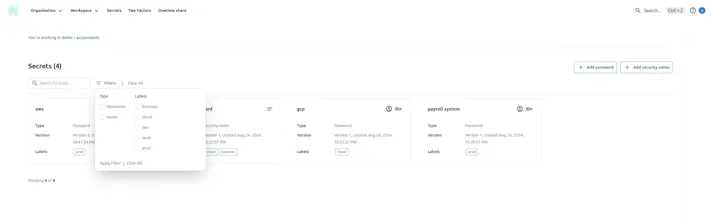
Meet Ennote: The Identity-Driven Secret Manager. We bridge the gap between human identity and infrastructure without the operational nightmare of legacy vaults. Securely store credentials with Post-Quantum cryptography. For Kubernetes, our Smart Agent pushes secrets directly to native memory in <1s via an outbound gRPC stream. Zero sidecars. Zero polling lag. Zero code changes required. Stop duct-taping your infrastructure and get real-time, Zero-Persistence security.

Hey Product Hunt! 👋 It’s been exactly a year since we first shared Ennote with this community, and today we’re back with our biggest architectural milestone yet.
Over the last 12 months, we talked to hundreds of DevOps teams. The consensus was clear: managing Kubernetes secrets with legacy vaults still fundamentally sucks. You are either paying a massive "RAM tax" to run sidecars, or you are dealing with 60-second polling lags using external operators.
So, we completely re-architected the delivery pipeline. Today, we are officially rolling out the Ennote K8s Smart Agent.
We ripped out the polling intervals and the bloated sidecars. Instead, our lightweight Agent uses an outbound-only gRPC stream to push updates directly to Native Kubernetes Secrets.
Here is what we just shipped:
⚡ Sub-1s Sync: Keys rotate in under a second. Zero polling lag.
🛠️ Zero Sidecars: No code changes. Consume secrets natively via standard envFrom, and our agent handles the automatic pod restarts.
🛡️ Zero Persistence: Plaintext keys exist only in volatile RAM for milliseconds.
🔐 Post-Quantum Security: We upgraded our Transient Envelope Encryption to NIST's Kyber-1024 standards, protecting your payloads against "harvest now, decrypt later" attacks.
To celebrate the update, we’ve permanently opened up a Free Developer Tier (up to 3 users + 1 K8s Agent) so you can test the push-based sync speed yourself.
I’ll be hanging out in the comments all day. I'd love to hear how your infrastructure has evolved over the last year and what you think of the new Agent architecture! 🚀