
HFlow is an open source SDK for scalable multimodal data pipelines in robotics and physical AI. Define your own transforms, checks, labels, and enrichments. HFlow handles orchestration, storage, versioning, provenance, and curation, so you can inspect data quality and reproduce how each dataset was built. HFlow is built by Hebbian Robotics and is part of Y Combinator’s Summer 2026 batch.



What's great
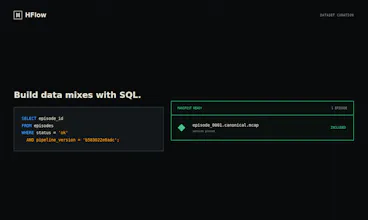
We've been dealing with exactly the mess they describe - a robotics data corpus where nobody could say for sure which version of a labeling script produced which episode. Ran the quickstart locally with no Docker or Airflow setup required, which was a relief since half the tools in this space assume you already have an orchestration stack running. Writing canonical MCAP episodes with a DuckDB-queryable manifest is the right call - being able to just query your dataset lineage with SQL instead of grepping through log files is a genuinely useful change in workflow.
What needs improvement
No visible pricing or hosted-tier info on the launch page - it's all self-run right now, which is fine for us but would be worth clarifying for teams that want a managed option instead of running the catalog service themselves.
vs Alternatives
We'd been rolling our own scripts on top of raw MCAP files plus a shared spreadsheet for tracking which checks had run. That works until two people touch the same episode set and the spreadsheet lies. HFlow replacing that with an actual versioned catalog was worth the switch even before considering anything else in the space.
Ratings
Ease of use
Reliability
Value for money
Customization
Report
7 views
Hi Product Hunt,
We built HFlow because robotics teams are collecting more hours of video data than they can handle. Each episode can contain camera streams, robot state, actions, timestamps, and metadata. As a corpus grows, one-off scripts make it hard to answer basic questions: Did a camera freeze? Did streams drift out of sync? Which version of a check ran? Can we reproduce the dataset we used?
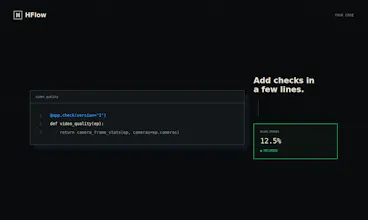
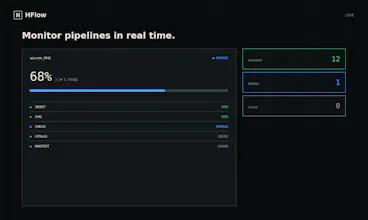
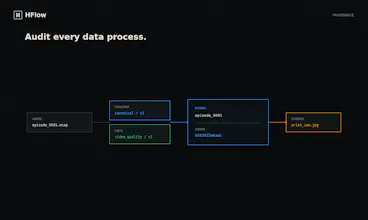
HFlow turns that work into a pipeline. Transforms, checks, labels, and enrichments stay yours. HFlow handles orchestration, storage, versioning, and curation around them. It writes canonical MCAP episodes with provenance, records quality evidence in a Parquet catalog, and builds version-pinned manifests with DuckDB.
The core lifecycle works end to end today. You can run the included quickstart locally
without Docker, Airflow, robot hardware, or an external service.
HFlow is Apache-2.0 licensed and built in public by Hebbian Robotics (YC S26). If you work with robotics or physical AI data, try the quickstart and tell us where your current data workflow loses the most context. Is it ingestion, quality control, provenance, or curation?
Kingston and Brandon
@kstonekuan better data smarter robots!