
Testera Probe
AI-driven API testing
35 followers
AI-driven API testing
35 followers
Free test management with hosted MCP for any AI client — Claude, Cursor, ChatGPT, VS Code, or your own agents. Agentic Test Management on Advanced: triage CI failures, draft-PR self-heal, automations, and webhooks.
Free
Launch Team

AWS Startup AdvisorPersonalized AWS guidance that meets you where you’re already building
Promoted


Hey Product Hunt 👋
I’m a QA engineer, and most of my API testing is flows, not single requests: create something, use its ID in the next call, upload a file, wait for a webhook, check the final state. Doing that in a request client meant copying IDs between tabs, keeping fixtures in my head, and then writing it all up again as test cases somewhere else.
So I built Probe to make the flow the main thing:
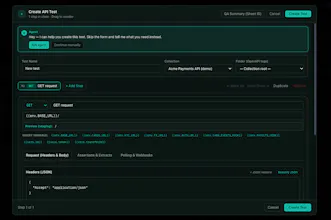
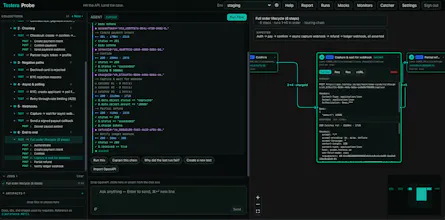
• Chains: multi-step requests on a visual canvas, with values mapped from one response into the next request
• AI agent: ask it to write a chain, explain why a step failed, or re-run it against your real environments
• Collections and artifacts: keep IDs, PDFs and photos alongside the chains as fixtures and evidence
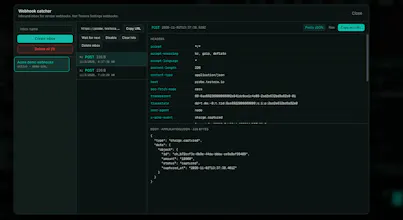
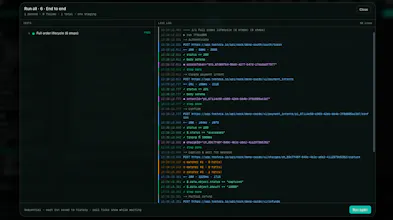
• Catcher and run history: catch webhooks and see every request, response and cURL
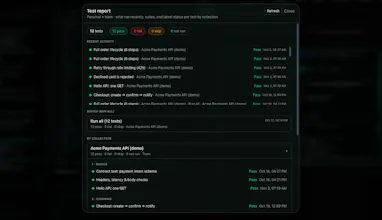
• Connected to test management: what passes becomes a test case in Testera, so exploratory testing turns into coverage
It’s made by Testera Labs, the team behind Testera (agentic test management). You can sign up free at probe.testera.io.
I’d love feedback, especially from QA folks who test chained APIs every day. What’s the most painful part of your setup today?
Topics: Developer Tools, Testing & QA, Artificial Intelligence, API
Link: https://testera.io/probe
The chains idea is what caught me — most of my API testing is exactly that flow: create something, grab the ID, use it in the next call, then wait on a webhook. Copying IDs between tabs and rewriting it all as test cases afterwards is the part I always dread. Making the flow itself the test case, with the webhook evidence attached, feels like the right shape for it. Curious how the self-heal handles a chain where the failure is a real data problem rather than a flaky step — does it flag that differently, or just retry?
the chain is the part i always end up recreating when an api test fails
keeping the ids and webhook evidence with it should make handing a failing run to someone else much less painful