
TinyFish
The web operating layer for AI agents
88 followers
The web operating layer for AI agents
88 followers
TinyFish is a unified web operations platform built for AI agents and AI applications. It enables developers to search the live web, extract clean structured content, browse dynamic websites, and automate authenticated workflows through a single platform. By providing reliable access to current web data and web interactions, TinyFish helps AI systems deliver more accurate answers, reduce operational complexity, and scale production workloads.

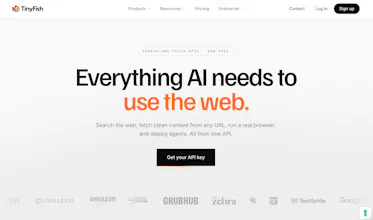
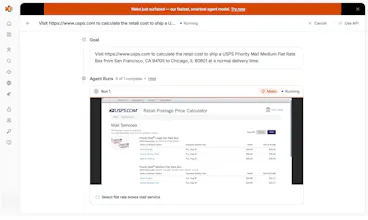
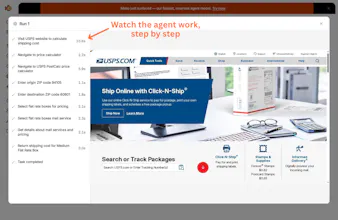
TinyFish is the web operating layer for AI agents.
Humans use Google to access the web.
AI agents use TinyFish.
One API for live search, clean structured extraction, dynamic browsing, and authenticated workflows. Everything an agent needs to actually use the web without the usual scraping pain. Would love feedback from anyone building agents or LLM apps. What’s the most annoying web thing you’re still hacking around?
Hey Product Hunters 👋
We’re Shuhao, Sudheesh and Keith, co-founders of TinyFish.
AI agents require reliable access to the live web to retrieve information, monitor changes, and complete real-world tasks. But the web was built for human eyes, not for automation: modern websites are JavaScript-heavy and frequently protected by authentication, bot detection, and multi-step user flows.
TinyFish is our answer. It is the web operating layer for AI agents and AI applications. It enables agents to search the web, extract clean content from known URLs, run managed browser sessions, and complete authenticated, multi-step website workflows through one platform.
With TinyFish, developers get:
• Mako: The web-native AI model that completes real workflows on the live web. Reliable at scale, at a fraction of frontier-model cost.
• Web search for discovering current web information
• Structured content extraction from static, dynamic, and JavaScript-heavy websites in Markdown, JSON, or HTML
• Managed cloud browser infrastructure with browser sessions, scaling, and fingerprinting
• Goal-based web automation for navigation, form completion, filtering, pagination, and multi-step workflows
• Authenticated web access with secure credential management through Vault and identity support through Profiles
• Developer-ready integrations through APIs, SDKs, MCP, CLI and Skills
Most teams begin with Search or Fetch to give their applications reliable access to web information. As their workflows become more complex, they can use TinyFish Web Agent to navigate websites, work through filters and pagination, fill forms, authenticate, and return results.
Explore TinyFish:
• Playground: https://agent.tinyfish.ai/playground
• Mako: https://www.tinyfish.ai/mako
• Integrations: https://www.tinyfish.ai/integrations
We’d love your feedback on:
What workflow you tried
Whether the results gave your agent the structure it needed
Which integrations or workflows you’d like us to support next
Thanks for checking out TinyFish, we can’t wait to see what you build!
Looks like a solid step toward making AI agents truly production-ready—congrats on the launch! 🚀
@better_shaya Thank you, Shaya! Really appreciate the support. That’s exactly the gap TinyFish is trying to close! Helping agents move from demos to web workflows that can actually run in production! (:
the web layer is the real bottleneck for agents rn 👀 which sites break most?