
Zro
Fast inference. Zero retention.
685 followers
Fast inference. Zero retention.
685 followers
Fast and optimized open-model inference on multi-region infrastructure with zero request retention.
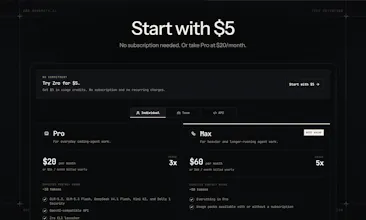


Free Options
Launch Team / Built With


Framer AI AgentsDesign and publish professional sites with AI
Promoted


👋 Hi Product Hunt!
We're MoonMath, the team behind Zro.
Over the last year, we've been obsessed with one problem: making AI inference faster and more efficient. As we worked with developers building AI products, we kept seeing the same tradeoff:
Use closed-source AI APIs and give up privacy and control.
or
Run open-weight models yourself and spend time managing infrastructure.
We built Zro so developers don't have to choose.
With Zro, you get a fast, OpenAI-compatible API for open-weight models with:
🌏 Multi-region hosted inference
🔒 Zero data retention & zero training on your prompts
🏢 Optional on-prem deployments
⚡ A serving stack optimized for coding agents and long-context workloads using MoonMath's in-house inference technology.
🛠️ Built for easy setup with the most popular AI coding agents
We're launching early because we want feedback from developers building real AI products. We'd love to know:
Which models should we add next?
What features are missing from your current inference provider?
What would make you switch?
🎁 Product Hunt launch offer
Use code PRODUCTHUNT to get 1 month of Zro Pro free.
Limited to the first 100 users.
We'll be here throughout the day to answer every question. Thanks for checking out Zro, we're excited to hear what you think! 🚀
@otsar_shalmoni Congrats on the launch.
The OpenAI-compatible API plus zero retention combo is the part I’d care about most.
For switching, I’d want three things very visible: latency by region/model, exact context limits and pricing, and a clear what happens to my prompts page that a security reviewer can understand in 2 minutes. Model wise, Qwen3 Coder, GLM, DeepSeek, and strong small models for cheap agent loops would be high on my list.
@marcus_mark Yes Mark! We are working on customization for each harness that gives you incognito vibes 😊
We also make sure disabling all the telemetry that is enabled by the harness you use like Claude Code, Codex.
@otsar_shalmoni Hello. Unfortunately, I missed out on this promotion. Will there be more like it so I can test it out?
The tradeoff between closed APIs and self-hosting open models is very real. most small teams want more privacy and control, but not the operational burden of running inference infrastructure themselves.
The OpenAI-compatible API, zero retention, and optional on-prem path make Zro feel practical for teams that want to start simple and keep more control as they grow. Curious how you handle routing across regions for long-context coding workloads without hurting cache efficiency or latency consistency?
@andrasczeizel We are not routing your request across region and that's how it wouldn't hurt the cache at all. Before setting up your session with API key you will be able to select which region you want to use.
Right now, all live machines are located in the EU, but US options will be available soon!
@emirsoyturk I see, thanks for the reply. Good luck with the launch & vercel day!
Congrats on the launch! Keeping it OpenAI-compatible is a massive smart move. A lot of teams want to switch to open-weight models for privacy but dread rewriting their entire agent orchestration layer or dealing with completely different API schemas. How has the drop-in replacement experience been for early testers? Are there any specific edge cases with function calling or streaming where the compatibility layer behaves differently than native OpenAI?
@franz_briones Thanks for your comment Franz. It's really difficult problem and ZRO has built-in support for many popular harnesses like Claude Code, Codex, Pi, OpenCode. You can see all of the ones we officially support here: https://zro.moonmath.ai/integrations. We are also adding new harnesses like Kilo Code, Grok Build, Command Code.
Which open-weight models would you like to see?
Is there any tool that you're using and ZRO doesn't list it as supported?
"Your code shouldn't be someone else's training data" is a strong line. Which open models are you running under the hood, and is EU hosting the default or a paid tier? Congrats on the launch
@alex_tomilin EU hosting is the default and we are working on adding new regions (e.g US). Right now GLM 5.2 and Minimax M3 are accesible via ZRO and we are testing/optimizing new models.
Do you have any models that you would like to see added?
Private inference is the box teams check last, usually right after their proprietary code turns up somewhere it should not. The part I would pressure-test is latency ten tool calls deep in a real agent loop, not on a single prompt. That is where most self-hosted setups fall over.
@shivangit26 Exactly, that is the reason we are optimizing our inference for long-context agentic workflows!
Let us know if there is any model you would like to see.
Congrats on the launch! Zero retention really matters once you're touching more than one company's data, I run a few different businesses through my own tool and the idea of any of that context leaking across clients or getting used for training is a non-starter for me. Curious how you think about audit logs on your end, if a customer asks "prove nothing was retained," what do you actually show them?
@stacywycof83995 Exactly the right question. Privacy and verifiability have been part of our ethos since our Ingonyama days.
ZRO doesn’t retain prompt or completion content. We only keep limited operational metadata such as token counts, latency, model.
We’re currently looking into ways such as independent audits and TEE-based verification to better understand how we can make these guarantees more transparent and verifiable over time
@emirsoyturk Appreciate the detail, and the Ingonyama history is reassuring, that's the kind of track record I'd want before trusting an inference layer with cross-client data. TEE-based verification would be the real unlock for me, since right now it comes down to trusting the claim rather than checking it independently. Will keep an eye on where that lands, would move a chunk of my own stack over once there's something auditable rather than just documented.
@stacywycof83995 Totally fair, thanks for the honest feedback!
zero retention is the right pitch for coding agents specifically, a lot of codebases can't go through a provider that might log or train on the prompts. is the latency comparable to the big hosted providers, or is there a tradeoff for the privacy guarantee
@omri_ben_shoham1 There is no need to trade it for privacy! In coding agent latency is determined by two numbers. TTFT (Time To First Token) and TPS (Token per Second). We are optimizing them especially for long-context agentic workflow so you have the smallest latency. Let us know what you think about our inference speed!