

Ask Maps by Google
Ask Maps questions, drive with immersive navigation.
556 followers
Ask Maps questions, drive with immersive navigation.
556 followers
Google Maps gets a major Gemini-powered upgrade. Ask Maps lets you ask complex, real-world questions about places and get personalized answers. Immersive Navigation adds vivid 3D routes with lanes, landmarks, and smarter guidance for a more intuitive driving experience. Rollout live in US and India.

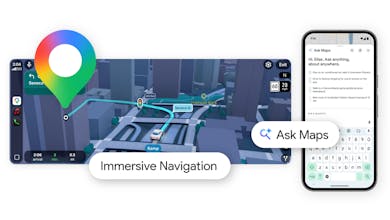

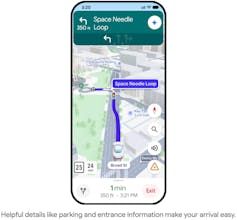
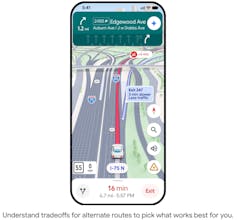
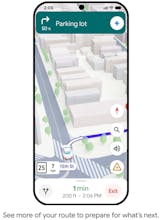


Google Maps is reimagining navigation with Gemini.
The new Ask Maps feature lets you ask real-world questions conversationally and get personalized recommendations powered by data from over 300M places and insights from 500M+ contributors.
Instead of searching multiple tabs, you can simply ask things like where to charge your phone, find a tennis court at night, or plan stops on a road trip. Maps then shows options on a customized map and lets you take action by booking, saving, or navigating.
Google is also introducing Immersive Navigation, the biggest navigation update in over a decade. It adds vivid 3D route views, highlights lanes, traffic lights, and crosswalks, and gives more natural voice guidance to help drivers prepare for turns, merges, and exits.
The result is a more intuitive way to explore places and navigate routes with real-world context and smarter guidance.
I hunt the latest and greatest launches in tech, SaaS and AI, follow to be notified → @rohanrecommends
@rohanrecommends As a new father, I've been thinking about where to find changing tables if i'm out and about with my family. Will this new feature be able to locate such information for parents in need?
The 300M places + 500M contributor knowledge base with Gemini's reasoning is a powerful combination. What's interesting is how this shifts navigation from turn-by-turn to contextual awareness - understanding traffic court availability at night or charger locations with real-time status. Curious about the latency for complex multi-constraint queries while driving. The 3D immersive view with crosswalk/traffic light visualization should significantly help navigation in unfamiliar dense urban areas.
The 500M+ contributors data layer is what makes this genuinely useful. Most mapping AI just wraps location data - this is actually learning from community knowledge about places.
The conversational query approach ("find a tennis court at night") finally matches how humans actually think about places. We don't search for category+filter combinations; we describe situations.
Immersive Navigation with traffic lights, crosswalks, and lane guidance in 3D is the perfect use case for phone cameras - turn-by-turn was always awkward on 2D maps. Curious if this will integrate with Android Auto/CarPlay for in-dash displays?
This feels like the natural evolution of maps.
Is the AI answering queries using real-time map data or more like a conversational layer on top of existing search?
Super curious how navigation + AI interaction will blend here.
The shift from keyword-based place search to conversational queries like "where can I charge my phone nearby" changes how people interact with maps entirely — it's less about finding a pin and more about solving a real-world problem in context. How does Ask Maps handle ambiguous or subjective questions like "best quiet café for working" — is it pulling from reviews sentiment, visit frequency, or something else?
As someone who's driven 2,000+ miles with Maps navigating, I'm curious how the LLM handles the ambiguity when someone asks "find me a coffee shop" while you're actively navigating—does it prioritize upcoming exits or reroute you somewhere better? The demo video's voice recognition seemed suspiciously good at parsing "somewhere quiet with good espresso near my route" without follow-up questions.
The conversational querying combined with 300M+ places data is a powerful combination. What stands out is the action-oriented design - not just showing answers but enabling booking and saving directly from the map. The Immersive Navigation with 3D route visualization addresses a real pain point for unfamiliar areas. Curious how it handles ambiguous queries like 'nice place for a first date nearby' - does it factor in review sentiment and atmosphere tags?