
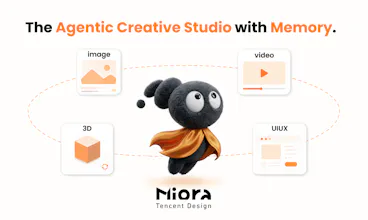
Not another AI image tool. Miora is an Agentic Creative Studio with Memory. Bring one idea, generate multimodal assets on one editable canvas, turn auto-built memory into a reusable Skill, then create more, always true to your taste. One person, a whole creative studio.



Hey Product Hunt 👋
I'm part of the team that built Miora.
The way we create is going through a paradigm shift. AI changed what a single step can do, but the work is still scattered across tools, and you're teaching it your preferences from scratch every time.
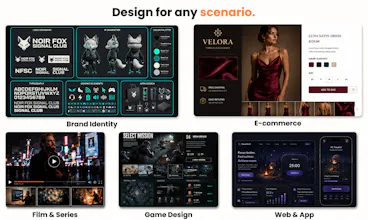
So we built Miora, an Agentic Creative Studio with Memory. Give it one brief, and it autonomously orchestrates a team of AI Specialists, delivering a full campaign asset pack in one go, from script, storyboard and video to UI/UX, illustration, 3D and brand systems, always true to your taste.
Why Miora is different:
Agent Memory: your brand, style, rules and taboos build up automatically, and stay fully editable. The first brief generates; every one after continues from where you left off.
Multimodal on one canvas: image, video, UI and 3D live together, not scattered across tabs.
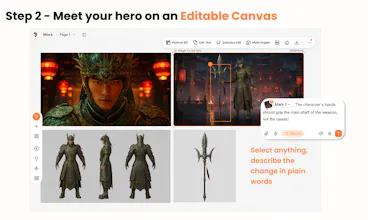
Everything stays editable: Edit Text, Selection Edit, or just say the change in plain words.
Skills you own: save a workflow as your own Skill. Reuse it, share it, never rebuild from scratch.
Memory is the part we most want to dig into. As you work, Miora quietly remembers your style and each project's rules, and it's no black box: you can view, edit and add to any of it. So the first brief generates; every one after is continuous creation built on your context. The deeper you go, the more it gets you.
Here's how it works:
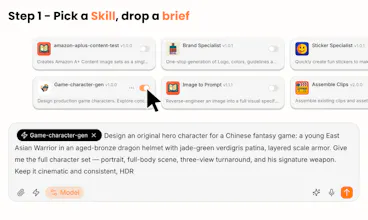
Pick a Skill, drop a brief: no prompt gymnastics, just say what you need.
Meet your hero in an editable canvas: one brief becomes a fully-designed character, and every element stays editable: select anything, describe the change in plain words.
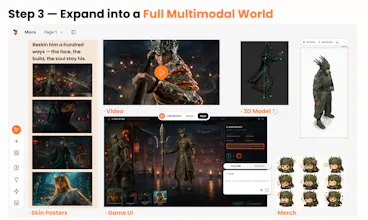
Expand into a full multimodal world: that one character fans out into video, game UI, 3D, skins and merch, all one consistent IP, all on a single canvas.
Turn the memory into your own Skill: Miora remembers your rules, taste and taboos, then packs the whole workflow into a Skill you reuse and share.
We believe creation is shifting from "people operating tools" to "creating alongside Agents." Your role changes from executor to director. From a single idea to a batch of deliverable work — that's the distance Miora wants to close.
To celebrate our launch, every new account gets 1,000 free credits to start creating right away.
Try it → miora.design
Report

@zack good to hear. the reason i ask about specialist visibility specifically is that when the pipeline gets faster, review debt piles up faster too. teams reviewing 40 assets a week can't debug what went wrong without knowing which agent decided what. curious what the roadmap looks like for that part.
Report


This looks insanely useful. Jumping between tabs and constantly re-prompting my style rules is the worst part of my workflow right now. Having an agent that actually remembers previous briefs is huge. Gonna go use my free credits now. Congrats!
Report


@Daniel Li replying to your point about pivoting away from old style rules - that's actually the scenario I'd want to stress test. if I delete/toggle off a chunk of rules mid-project, does the model cleanly forget them or does it sometimes still leak old style choices back in because they were baked into earlier generations it's referencing for consistency? explicit and editable is great for the "on paper" rules, but generation history itself can be a second, implicit memory that's harder to edit away.
Report

Maker
@omri_ben_shoham1 In Miora, explicit memory acts as a strong, rigid constraint that you can toggle. The generation history, on the other hand, acts as a softer context. While it's true that you can't manually toggle off the lingering stylistic history of past generations, it is designed to naturally fade away as you move forward. Our canvas doesn't use rigid wiring, freely experimenting with wildly different styles side-by-side won't confuse the agent. If you ever feel an old style stubbornly lingering, you can simply take control by actively selecting a new batch of references on the canvas to emphasize your new direction, immediately overpowering any fading history.
Report

Maker
@omri_ben_shoham1 That’s exactly the kind of edge case we want to test, so please try it.
When your taste changes, we recommend telling Miora that a rule no longer applies instead of simply deleting it. This gives the Agent an explicit correction to follow. Miora updates memory only from new inputs and does not repeatedly scan old conversations or generations, so a removed rule will not return just because it appeared in earlier work.
Creative workflows vary a lot, and we’d love to hear where this works and where it doesn’t.
Report
Maker
@omri_ben_shoham1 BTW, memory is just the one of many exciting features coming to Miora. We’re rethinking creative generation around a true Agent, with the goal of transforming how people create while dramatically lowering the barrier to entry. Much more is coming.
Report

The editable Agent Memory holding a brand's rules and taboos is more useful to me than one-shot generators that forget my taste every brief. Day-one question: is that taste memory one global profile, or scoped per project so a client brand's rules don't bleed into my personal work? And when I save a workflow as a Skill I "own," can I export it or hand it to a teammate outside Miora, or does reuse only happen inside my own account?
Report
Maker
@leo404 You’ve landed on exactly the problem we designed for. Miora has two kinds of memory:
Personal memory lives with your account and can carry context across projects. Project memory stays inside that project, so it can hold a client’s brand rules, taboos, key decisions, and progress without bleeding into your personal work.
Skills are not limited to your own account. You can use them yourself, download and share them with teammates, or publish them to the marketplace for other creators to use.
Report
The personal-vs-project split is exactly the guardrail I wanted - client taboos staying in project memory is what makes me trust it. On Skills: when I download or hand one to a teammate, does it travel as a clean workflow they fill with their own memory, or does it carry a snapshot of my project memory/taste with it? Asking because a shareable Skill that packs my client's rules would just move the bleed problem to their account.
Report
Maker
@leo404 You’re right to call this out. A Skill does not automatically export a raw snapshot of your project memory. But when Miora helps create one, it may identify personal preferences or taste that could be useful to carry forward.
Since Miora cannot know on its own what you want to preserve and share, we recommend defining the scope with it during creation, then reviewing and refining the Skill together before sharing it. That lets you choose whether it is a clean workflow or one that intentionally includes a shareable part of your taste, without accidentally packaging client-specific context.
Report


@sherina_chen pretty interesting, and potent to see Tencent behind this!
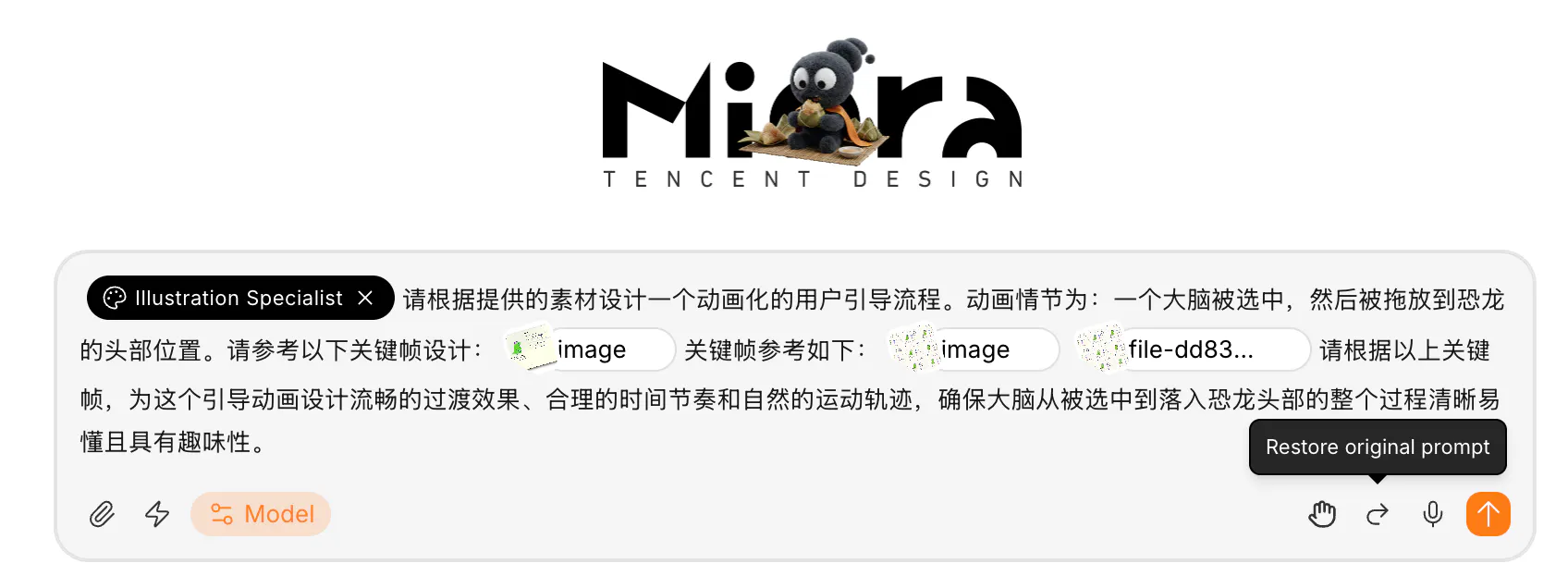
One nit — when I tried to "polish my prompt", it translated it to Chinese!
Report
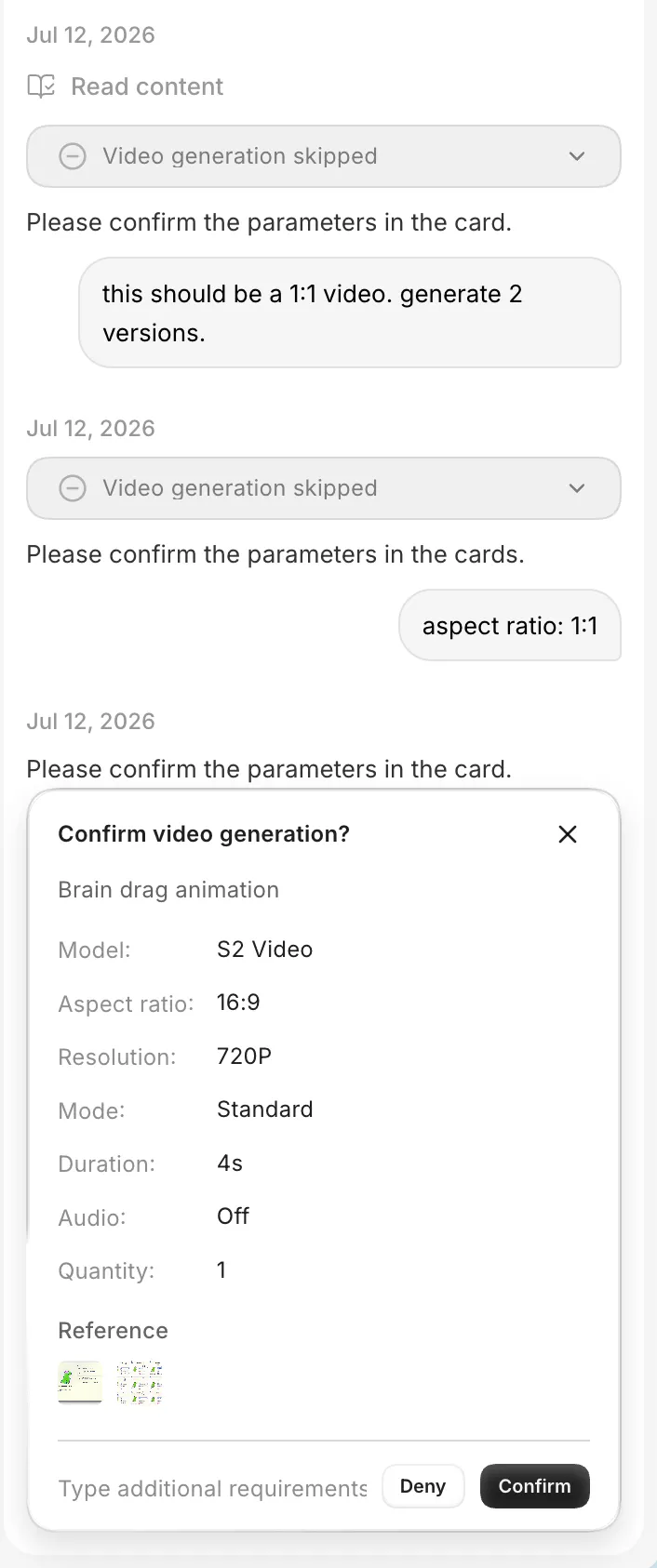
@sherina_chen also, when verifying the video settings, I couldn't figure out how to alter them. I could either Confirm or Deny or "type additional requirements", but typing them didn't seem to make a difference.
Report
Maker
@chrismessina Thanks for flagging these.
The prompt polish definitely shouldn't have switched your prompt to Chinese. My guess is there may be some interaction between the polish step and our language handling, but either way, that's not the intended behavior.
And you're right about the confirmation flow too. If a user gives additional instructions at that step, they should have confidence those instructions are actually shaping what happens next. In your example, asking for a 1:1 video with two versions should absolutely have been reflected in the final setup, so either we failed to surface the change clearly enough, or we dropped it somewhere in the process.
I've already shared both issues with the team and we're jumping on them now.
The screenshots are super helpful. Really appreciate you digging this deep into the product and sharing the feedback.
Report
@Zack Lee that explicit-correction model makes sense, but it puts the burden on the user to remember to say something every time their taste shifts. realistically most people won't bother until the drift is annoying enough to notice. is there any passive signal you use, like consistently editing away from what a rule suggests, that nudges Miora to flag "hey, this rule might be stale" instead of waiting for an explicit override?
Report
Maker
@omri_ben_shoham1 That’s a great point. Memory system looks at the user’s current input and weighs both strong and weak signals when deciding whether to add or update a memory. An explicit correction carries more weight, while smaller signals can indicate that a preference may be shifting.
We’ll keep refining how Miora interprets those signals based on user feedback. If you notice situations where it reacts too strongly or misses a change, we’d love to hear about them.
Report
the memory-as-editable-rules approach is the right call, most "AI remembers your style" tools hide it as a black box you can't inspect or correct. being able to literally add/remove a rule and see it apply next generation is a much more trustworthy pitch for studio use than "the AI just gets you" marketing
Report
Maker
@omri_ben_shoham1 Couldn't agree more. Especially for teams, editable memory feels much more useful than magical memory.
Report

Maker
@omri_ben_shoham1 Really appreciate that!
We think creative teams need more control, not just "trust the AI." Making memory editable means it's easier to refine, share, and keep everyone aligned instead of hoping the model remembers the right things~
Report
Maker
@omri_ben_shoham1 Spot on, Omri! This touches exactly on a major pain point we observed in real creative workflows.
Memory is fantastic, right up until the moment you need to pivot. In actual production, there are always times when you have to partially or completely scrap a previous style and take a new direction. In those situations, a "magical" black-box memory becomes a nightmare—it stubbornly drags you back to the old context, and you end up fighting against the tool.
By making memory explicit and editable, creators can literally just delete or toggle off the outdated rules. You keep the foundation that still works, and toss the rest. Really appreciate you highlighting this practical difference!
Report
Maker
@omri_ben_shoham1 That’s the key distinction for us. We don’t see memory only as hidden personalization. We want it to work more like editable creative rules.
A team could use it as a brand guide, a style system, character rules, tone guidelines, or approved direction notes. Miora may organize the memory automatically in the background, but users should always be able to inspect it, edit it, and decide what should guide the next generation.
Report
Maker
@omri_ben_shoham1 btw, memory is just the one of many exciting features coming to Miora. We’re rethinking creative generation around a true Agent, with the goal of transforming how people create while dramatically lowering the barrier to entry. Much more is coming.
Report

Hey cool this treats memory as something you can inspect and edit rather than a black box the model manages on its own. A lot of "personalization" in AI tools happens invisibly, so letting someone add or remove a specific rule changes the trust relationship with the tool in a big way for sure
Report
@sherina_chen 100%. I actually published a study in 2025 where I created guidelines for human-centered multi-agent systems, and transparency and explainability was one of them. Happy to see you guys implementing that!
Report
Maker
@uddipta You put it really well. The trust relationship changes when memory is inspectable and editable. Miora can organize memory automatically in the background, but users should be able to see what it learned, remove what’s wrong, and add specific rules when needed. Memory should feel like a creative system you own, not a black box.
Report
Maker
@uddipta Such an insightful comment, Uddipta! "Trust" is such a crucial word for us. We strongly believe that true creative tools shouldn't require blind faith in a black box. We designed Miora to earn your trust not just through a hands-on, transparent working mode on the canvas, but also through consistent reliability when executing your specific vision. Letting you inspect, tweak, and own those rules is the only way to build a real partnership with the AI rather than just fighting against it. Thanks for the support!
Report
Thanks for the thoughtful review. You’re right that grouping needs to get better. We already have a basic version in place, and we’ll keep iterating quickly based on how people use it and the feedback they share.
As more 3D and UI assets live on the canvas, performance becomes more demanding. We already have optimization work underway, but this will be an ongoing effort, not a one-time fix.
Thanks again for trying Miora and pushing on the details. We’ll keep improving it with the community as we build toward a more agentic creative future.