Reviewers mostly see v0 as a strong UI prototyping and frontend starting tool: it turns rough prompts or screenshots into clean React, Tailwind, and often Next.js-friendly code quickly, with a fast iteration loop and solid design taste. Several founders, including the makers of Basement Browser and Tusk, say it helped them ship sites and explore designs faster. But the praise is narrower than “full product” success: users report vague prompts can derail output, design-system alignment and backend/data wiring are weak, and pricing feels hard to justify when retries pile up.
prototyping (8)production-ready code (5)fast UI generation (6)React and Tailwind support (4)
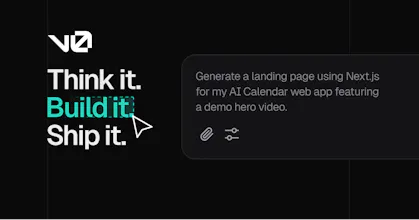
v0 turns a rough idea into a working UI in minutes. I describe what I want, get clean React and Tailwind back, and ship it instead of fighting boilerplate. The output is close enough to production that the edits are small, and the iteration loop is fast enough that I stay in flow instead of stalling on layout. It's now my default first pass for new pages.
What needs improvement
assumes user input (2)
It can over-assume structure when the prompt is vague, so you get further by iterating in small steps than asking for everything at once. Tighter control over reusing an existing design system and component library would help on
larger projects, so new output matches what is already there instead of needing manual alignment.
Generic chat models give you code but no real design sense, and you spend the time wiring it into a stack yourself. v0 wins because it is built around React and Tailwind, the components drop straight into a Next.js project, and
the design quality out of the box is higher. Less cleanup, faster to something I would actually ship.
I loved v0 to generate landing pages, but as a software architect, I like a bit of thoroughness and polished output. Which is fine; for free landing page generation from a single prompt, it beats many so-called industry leaders in this space. Solid product.
What needs improvement
I still assume it improved for the backend integration. Which is ironic since Vercel is one of the most democratized platforms for complex delivery and release management.
vs Alternatives
It is free and UI/UX is almost on point, if you oput the right template in.
One of two options I use for frontend design and sites that don't require much backend. Can't wait for them to connect Convex then v0 will solidify my first stop.
I still use Lovable sometimes and probably more since they connected Supabase, this just make setting up my database way too easy. That's the feature that keeps me split.




 Lovable
 bolt.new
 Replit