
 •
•14d ago
Is solving your "own problems" the best way to build a product?
For us, it started from something frustrating: creating content felt very annoying and time-consuming. We tried the classic way: scripting, memorizing, filming, editing. But none of it felt authentic. And honestly, it was eating time we needed to focus on other things.
At the same time, we kept reading the same advice everywhere:
"founders should build in public and create content consistently". Easy to say but harder to do in reality. So instead of forcing ourselves to create content from scratch, we tried something simple: recording our own calls and using those moments as content.
•20d ago
Everyone says "build in public"… but how do you do it without making it a full-time job?
Building in public is important today. It helps you build a community, get feedback, and create traction around your product. But creating content to share every day shorts, posts on X, LinkedIn, Instagram can quickly become boring and very time consuming.
By recording your meetings with Prodshort, you get content ready to share: Shorts, X posts, LinkedIn posts... You keep things authentic, because the AI documents what you actually do and doesn t create fake content from scratch. Your real progress, your real discussions, your real decisions become things you can share.
It makes build in public much easier. You can share updates about your project directly from your calls: progress, ideas, feedback, small wins... Stay consistent with your build in public without adding extra work to your day !!
•21d ago
How many calls do you do per day?
As founders, calls are part of our daily life. Brainstorming, quick updates, random discussions with the team and there s always value in those moments. But most of the time, all that value just disappears after the call.
By connecting Prodshort to your calendar, it automatically joins your calls and turns them into ready-to-post content.
If you're a founder and want to create content, I'm doing short discussion calls. Let's connect !!
•17d ago
Is changing your pricing a mistake… or just part of the process?
At the beginning, we tried to define pricing early. Plans, tiers, limits: everything looked clear. But once we started getting real users, things changed. Feedback came in. Some features were used more than expected. Others not at all. Sometimes it felt like the first pricing we defined was just a "starting point", not the final one.
From your experience:
Did you change your pricing after launching?
And how important was the first pricing you defined for launch?
•9d ago
How do you keep momentum after launching a project?
Launching is exciting because everything is happening at the same time. People check the product, you get feedback you talk to users, you feel that something is moving. But after the launch, it becomes harder. The big moment is gone, and now you have to keep showing up.
Personally, I think this part is underestimated. Because launching gives you attention, but it doesn t automatically give you growth. For example, after a launch you still need to:
follow up with users
turn feedback into clear tasks
keep posting updates
Improve onboarding
stay in touch with people who supported you
...
 •
•1mo ago
We just launched our Alpha and we need your honest feedback.
I built Prodshort because I understood after my previous companies that the hard thing is not to Build but to Sell.
But because I'm a builder, not a seller. I decided to build something that Sells for me.
And Because the trend is Founder Led Marketing, I decided to build something that Create content on your behalf.
But there was a lot of AI tools out there. So I decided to go the opposite way, make it the most authentic possible.
I want you to create content when you are not even aware of it.
And honestly it worked for me. Many people tell me it's amazing but to keep it honest, NO ONE PAYED, and that's the only KPI I'm looking at.
For now, I have feedback about the landing page being too AI generated, and doesn't reflect the quality of our product.
And Builder socially scared from sharing there first content.
Let me know what you think https://www.producthunt.com/prod...
•1mo ago
ProdShort - Turn meetings into ready-to-post shorts and posts
•11d ago
1 Launch, 2 Co-Founders, 3 Awards: How we prepared for Product Hunt
We launched on Product Hunt on April 9, 2026. From this launch, we ended up with:
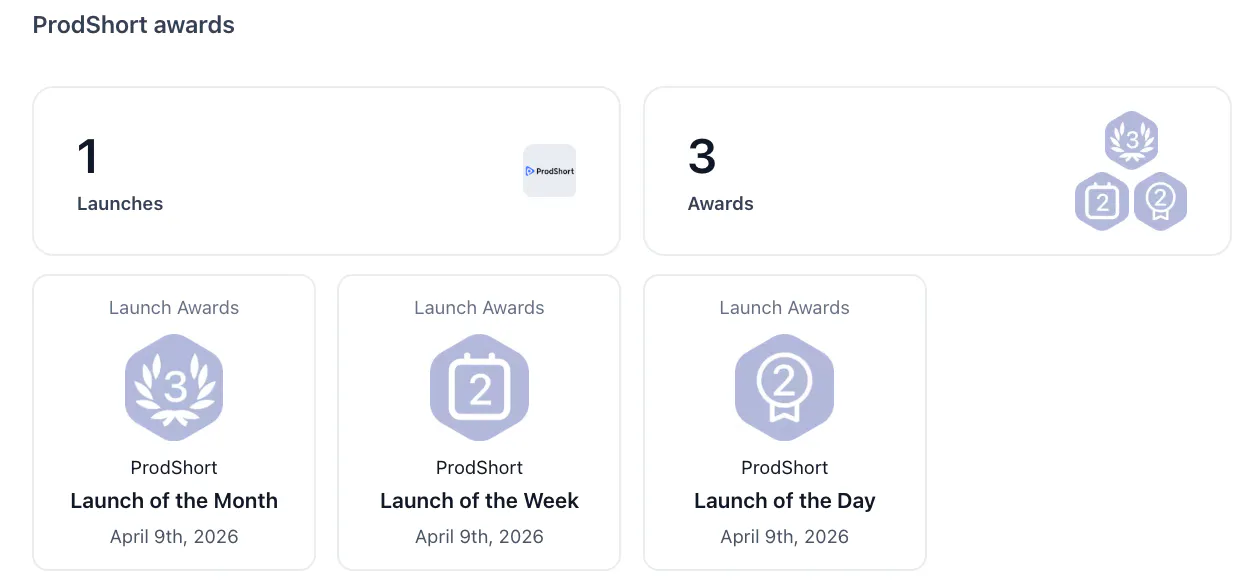
But the real work started weeks before launch day.
With @bengeekly , we spent weeks trying to understand how @producthunt actually works. Not by reading random launch guides , but by being active on the platform:
•12d ago
I did 100 calls to build the AI interviewer I wanted. Try it free
First, why we build an AI interviewer?
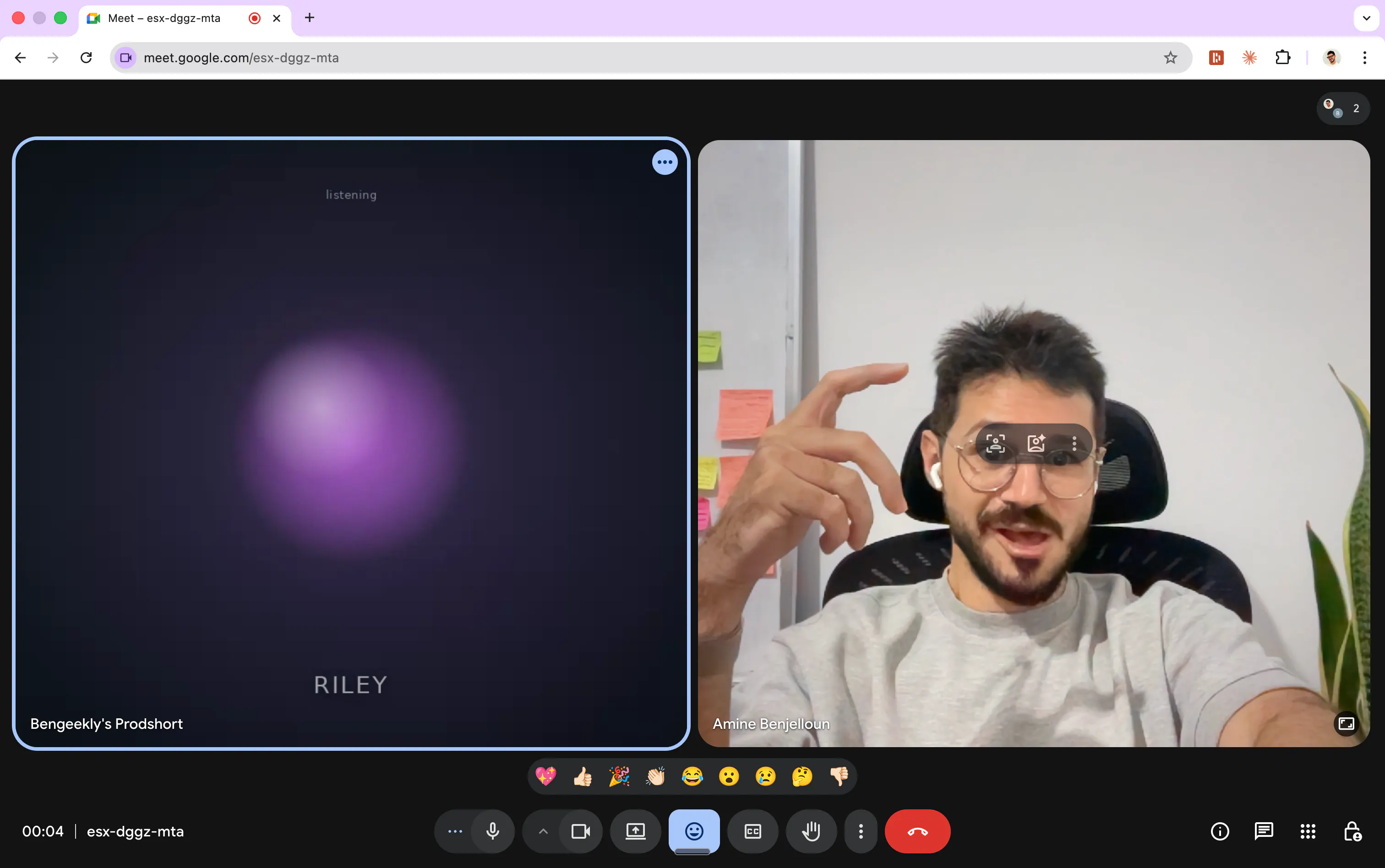
To ease the onboarding process.
After our Product Hunt Launch, many people signed up but didn't test the platform because they need someone to do a call with, and if we lose that momentum, the user is lost.
•18d ago
How do you decide which feedback to turn into features?
Since sharing Prodshort here on @producthunt , we ve received a lot of early feedback. Ideas, feature requests, small improvements, UX feedback sometimes things we didn t even think about.
How do you decide what to actually build from all that feedback?
Some feedback looks useful at first, but once you test it, you realize it adds complexity without real value. Other times, a small suggestion turns into something essential for the product.
Would love to hear from your experience:
How do you handle early feedback without going in too many directions?